
Why we should bring stereotypes back
At least some of them

If you’re at least a mildly progressive person, you’re probably sensitive to stereotyping, the practice of generalizing some claims across whole groups of people. Very likely, you think of them as bad taste, or even worse: offensive and repulsive.
Claims such as “women are bad drivers” or “white people suck at long distance running” are treated as egregious mistakes, and if you utter them (or find yourself in a company of people who do), it’s only a matter of time (measured in seconds) before someone voices a correction, saying something like “Well, my mom is actually a great driver, so that’s wrong!”
I think stereotypes have an undeservedly bad rep, and in this article I’ll explain why. Part of it stems from the way we talk about them, but it also comes from our failure to engage in a particular kind of reasoning. Our conversations about (to be honest, it’s mostly against) stereotypes operate entirely on the level of social management, instead of epistemic evaluation.
We should change that.
Critical thinking demands that we dig deep beneath social norms and continuously question our conceptual apparatus.
Here I want to make an argument that will, perhaps, be slightly heretical: we are taught to think about stereotypes in two ways, both of which are wrong. The reason we can’t discuss them productively, both in our personal lives, as well as in public discourse, is that the proper framework to do so is chronically absent from how we think about thinking.
That framework is statistics.
The two wrong frameworks
The first dominant framework treats every stereotype as a moral failure. To utter a generalization about a group is, in this view, to commit a small act of prejudice. That’s why a correction is considered the proper response (which is sometimes gentle, other times not so much) aimed at making the speaker understand that what they said was wrong.
Under this framework, the problem with stereotypes is exclusively ethical; the empirical considerations (about the correctness of the claim) don’t even come up. The accuracy of the stereotype is treated as beside the point, and morality is all that matters.
I’m sure we all understand why this framework exists. Stereotypes have historically caused (and continue to cause) real harm. More often than not, they are wielded against the most vulnerable among us. So, the moral instinct to push back against them is not unreasonable.
But as an epistemological tool, this framing is useless. To paraphrase Richard Rorty, it’s a conversation-stopper: it shuts down inquiry even before it can begin. And sometimes, we want to continue the inquiry because stereotypes are also information.
The problem is that the moral framework treats every generalization as if it had the same (epistemic) status as every other generalization, which is clearly not true. “Tall people are more likely to play professional basketball” and “Bosnians are stupid” are both generalizations about groups, but they are not equally informative. The moral framework can’t help you understand the difference because it prevents you from even engaging in any other kind of evaluation.
The second dominant framework is the logical refutation. I’m sure you’ve hear someone say “Asians are good at math,” and then someone else immediately points to a counterexample: a specific Asian person who is not good at math, or a non-Asian person who is. The counterexample is supposed to demonstrate that the stereotype is false.
As far as logic goes, counterexamples work perfectly well to show the falsity of some universal (affirmative or negative) claims. But, the problem with this approach is that it misunderstands the nature of many claims classified as stereotypes.
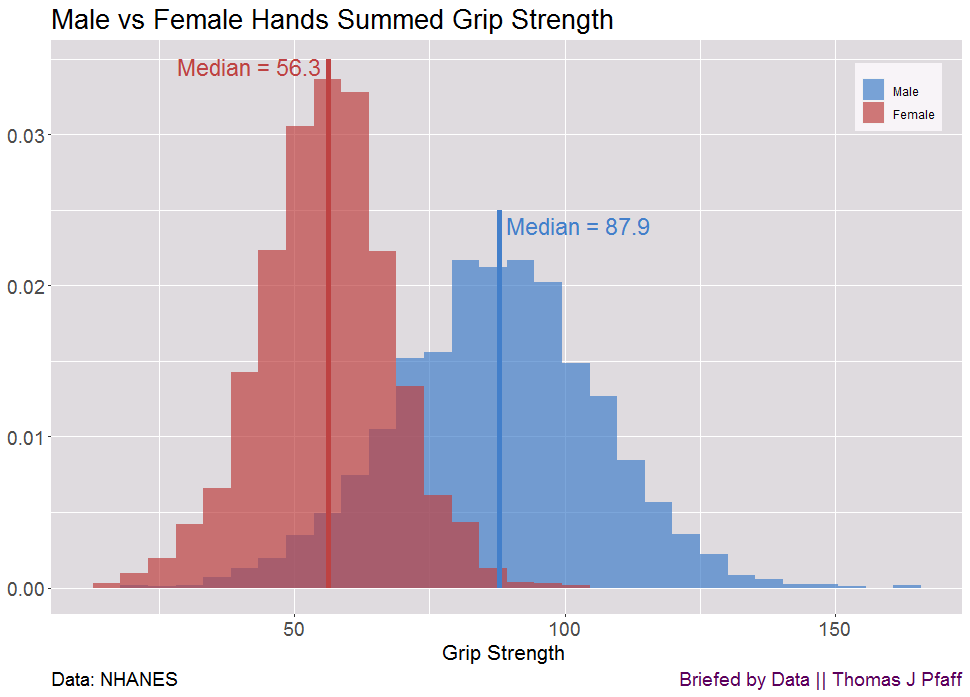
No critical thinker who says that “men are stronger than women” thinks there are no weak men or strong women. The claim is not a universal one. It is a claim about averages, or about the central tendency of one distribution relative to another. Refuting it by producing a counterexample is a category error, like trying to disprove the claim “summers are warmer than winters” by pointing to a cold day in July. It doesn’t work.
Honestly, this is the kind of error that should embarrass anybody who thinks of themselves as a critical thinker. A day doesn’t pass in which I don’t encounter this reaction to a stereotype online. It’s frequent in any debate including gender, race, or ethnicity. It’s like we’ve collectively retreated from critical thinking into our protective cocoons that prevent unencumbered thoughts to occur.
Part of it is political and ideological, I get it. But, the real reason is that most people have never been taught to distinguish between universal claims, claims about averages, and claims about distributions. We were taught to treat all generalizations as if they were universals, which is convenient for refutation purposes but bad for actual thinking.
For that I blame lousy statistical education.
A century-old idea we forgot
It’s perhaps fitting that the original usage of the word “stereotype” supports the statistical (and not moral or categorical) interpretation.
The term was introduced into modern discourse by the American journalist and political theorist Walter Lippmann in his 1922 book Public Opinion, where he framed it as a cognitive phenomenon. Stereotypes, in his original conception, are the mental pictures we form to navigate a world that is too complex to engage with in its full particularity. They are simplifications, or models of the world. As such, sometimes they are accurate, sometimes inaccurate; often a mix of both.
The moral framing came later, and while it captured something real about how stereotypes can be deployed harmfully, it unfortunately displaced Lippmann’s epistemic framing. As our society became more inclusive, just, and liberal, we slowly stopped asking whether a given stereotype was accurate, and started asking only whether it was morally acceptable. But, these are different questions, and we have impoverished our thinking by choosing one over the other in every situation.
The statistical framework
It’s time to reverse this. I am confident we can do that responsibly. So, here is the framework I want to propose, and which I think anyone who wants to think critically about the world should adopt.
A stereotype, properly understood, is a claim about a distribution. It is an empirical assertion that the average member of one group differs from the average member of another group along some dimension, or that members of a group cluster around some attribute more tightly than the general population does. This is a distinctly statistical claim. Like any statistical claim, it can be true or false, well-supported or poorly supported, precisely or vaguely specified.
The right questions to ask about any stereotype, then, are not moral or logical but empirical. What is the actual distribution? How large is the difference between the group averages? How much overlap is there between the distributions? Is the evidence good or bad? Is the effect size meaningful, or vanishingly small? Are there confounding variables that explain the apparent pattern?
These are empirical questions with answers that can be found in data, verified, and replicated. We can use them to reason responsibly even when the answers are uncertain.
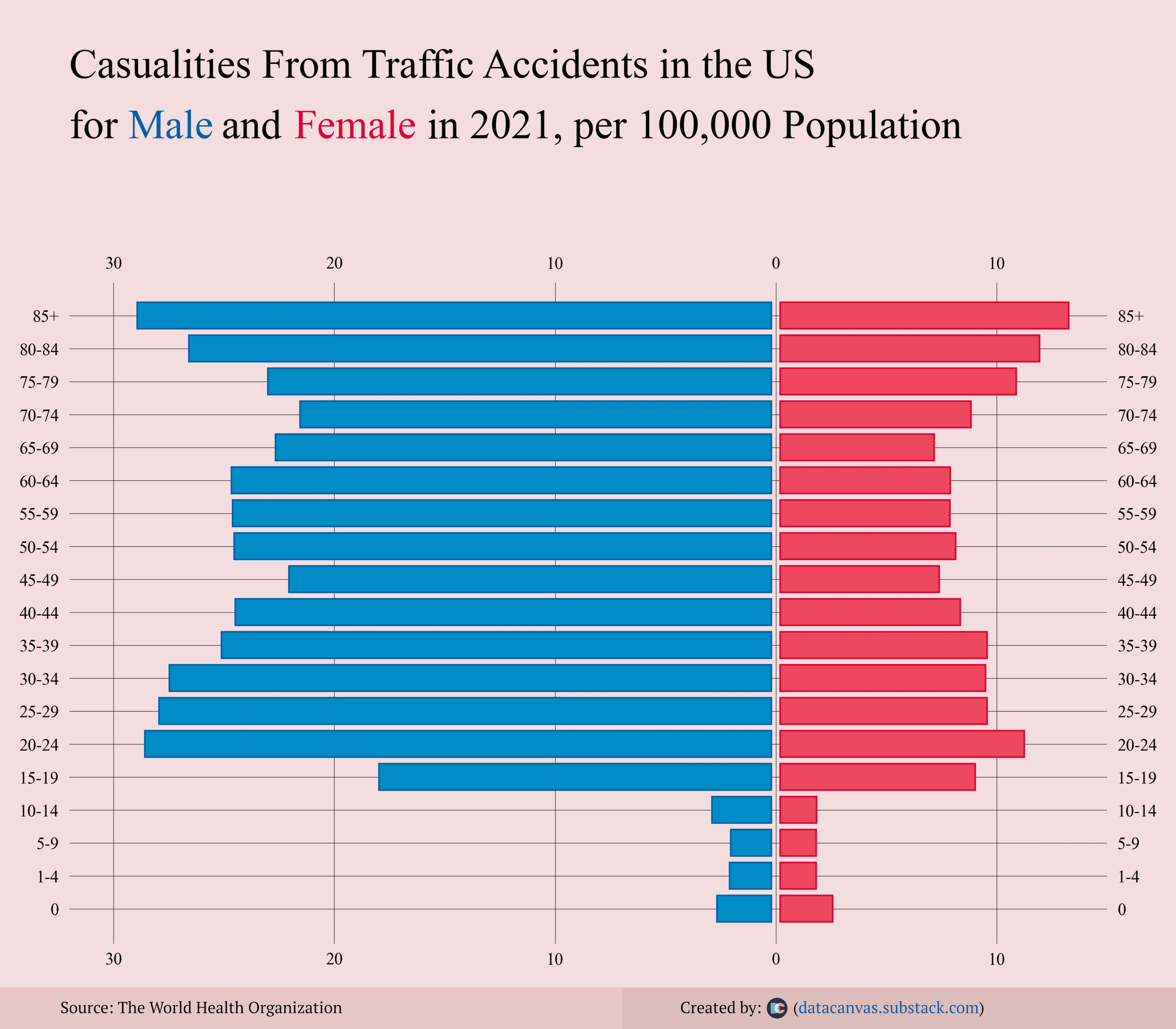
Consider the example I mentioned earlier, about women being worse drivers. Treated as a moral claim, it is clearly offensive. Treated as a logical claim, it is trivially refuted. But, treated as a statistical claim, it actually becomes interesting, inviting for more inquiry. Insurance companies, which have an obvious financial incentive to be accurate about driver risk, have actuarial data going back decades. The data show, in fact, that men have more accidents per mile driven than women, particularly at younger ages, and pay higher insurance premiums as a result.
The stereotype, evaluated empirically, is the opposite of true.
This is the best aspect of the statistical framework: we not only have a reliable way to establish the truth of some generalizing claim, but we can also do it in a non-moralizing, purely factual way. The framework is more honest, more rigorous, and more useful than either of the alternatives.
The objection
There is an obvious objection to this view, and I want to address it directly because I think it strengthens the argument rather than undermining it.
The objection is this: even if a stereotype is statistically accurate at the group level, applying it to an individual is a separate kind of error. The fact that men, on average, are stronger than women tells you nothing useful about whether the specific person standing in front of you is strong. Group averages have somewhat limited predictive power for individual cases, especially when the distributions overlap significantly, which they very often do.
This is correct, but it just shows the importance of the statistical framework. The harm caused by stereotypes is, in most cases, not the harm of holding an inaccurate generalization, but the harm of misapplying a group-level statistic to an individual case. As most statisticians (and machine learning experts) know, every prediction contains an irreducible error: the amount to which the data point in a test set strays away from the central tendency of a distribution. When we reason about our fellow human beings, that error should nudge us to pause and give people the benefit of doubt before making judgments or taking actions based on those averages.
However, this doesn’t mean we should give up in trusting that the averages provide us with the most accurate description of some statistical distributions. Fortunately, we live in a free society, in which access to a lot of data is not only permitted, but also encouraged. Many social institutions, from the governments to private enterprises share datasets we can use to compute these averages, and yes — create some stereotypes from them. These stereotypes may be about gender, race, ethnicity, sexuality, all the sensitive topics we’ve been trained to politely avoid.
But, if we’re critical thinkers, we’ll do that nonetheless.
The importance of statistical education
The reason most of us reason poorly about stereotypes is that we were never taught to think statistically. This type of thinking is notoriously under-taught (or in the worst case, completely absent) from school curricula. Even in college, in non-quantitative majors, very few students are required to take statistics classes, and even when they do statistics is treated as just an area of math, instead of a strand of critical thinking.
We’re usually taught universal claims (”all swans are white”) and we were taught counterexamples (”here is a black swan”). But, unless we are training to work with data, we’re rarely taught how to evaluate claims about distributions, understand statistical significance, or reason with averages. These are foundational skills for thinking about almost anything important in the modern world, from risk to policy, medicine, or business, and all individuals should posses at least a basic mastery of them.
This is why I have argued, repeatedly, that critical thinking has to be taught as its own subject, not absorbed as a byproduct of other content. Within it, there is ample room to teach and learn statistical reasoning. Doing so would make our conversations about stereotypes (and about anything else, frankly) more productive.
We are operating, collectively, with a cognitive toolkit that was outdated decades ago. It’s time for a change.